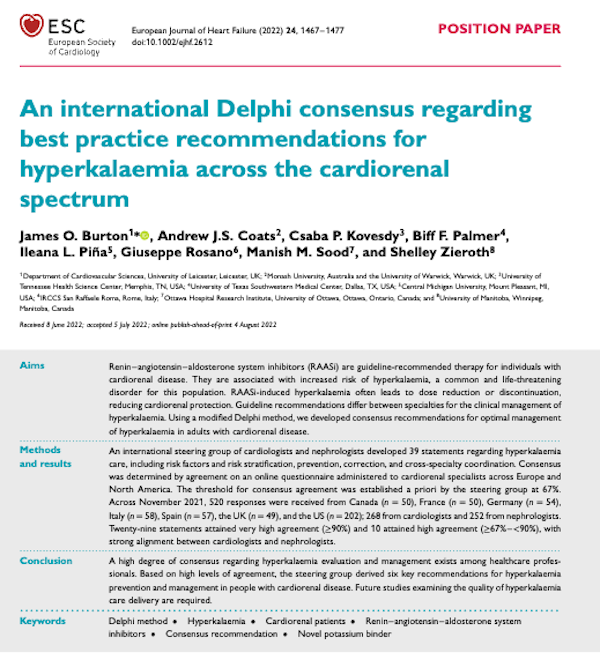


Renin-angiotensin-aldosterone system inhibitors (RAASi) are guideline-recommended for cardiorenal disease, but they raise the risk of hyperkalaemia, a common and potentially life-threatening complication in this population. When potassium rises, RAASi are often reduced or stopped, and the cardiorenal protection they provide is lost. Guideline advice on managing that trade-off has differed between cardiology and nephrology.
To resolve where the two specialties agree, an international steering group of cardiologists and nephrologists developed 39 statements across four topics, from risk stratification to cross-specialty coordination. The statements were tested in a modified Delphi consensus through an online questionnaire completed by 520 cardiorenal specialists across Europe and North America, with agreement pre-specified at 67%.
Every one of the 39 statements reached consensus, 29 of them at very high agreement of 90% or above, with close alignment between cardiologists and nephrologists. The six recommendations were direct: RAASi should not be de-escalated or discontinued for hyperkalaemia until other management measures have been optimised, and novel potassium binders should be the preferred agents to enable and maintain optimised RAASi therapy.
Triducive was commissioned as the independent facilitator for this modified Delphi consensus, analysing the responses and supporting the manuscript. The strong cross-specialty agreement gives clinicians a consistent basis for managing hyperkalaemia without withdrawing protective therapy.
Burton JO, et al. European Journal of Heart Failure, 2022; 24(9): 1467–1477. DOI: 10.1002/ejhf.2612