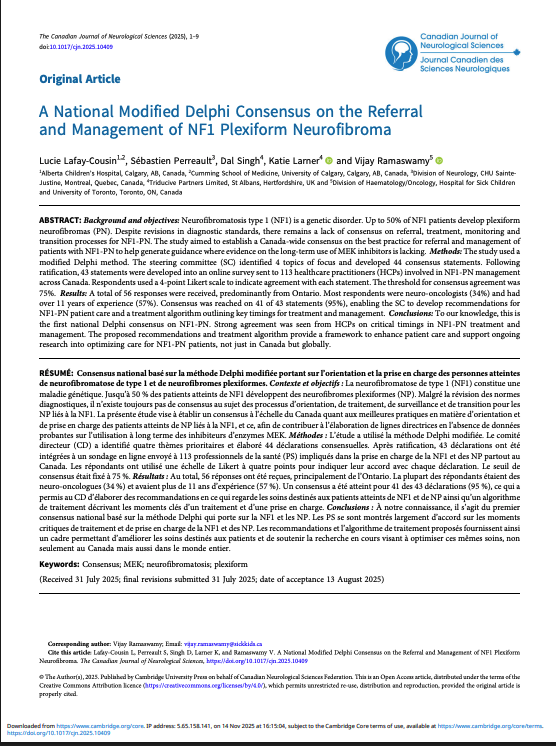


Neurofibromatosis type 1 is a genetic condition, and up to half of those affected develop plexiform neurofibromas, tumours that can cause pain, disfigurement and disability. Even as diagnostic standards have been revised, there has been no agreement on how these patients should be referred, treated, monitored, or moved from paediatric into adult care, and evidence on the long-term use of MEK inhibitors is still limited.
To establish a national standard, a steering committee of paediatric neuro-oncologists developed 44 statements, 43 of which were tested through a modified Delphi consensus. The survey was sent to healthcare practitioners involved in the condition’s management across Canada and completed by 56 of them. Consensus was pre-specified at 75% agreement.
Consensus was reached on 41 of the 43 statements. The panel agreed unanimously that treatment should involve multidisciplinary collaboration, that children showing early signs should be referred to a specialist experienced in the condition, and that referrals for symptom-free plexiform neurofibromas should happen within three months. The work also produced a treatment algorithm setting out key timings.
Triducive acted as the independent facilitator for this national Delphi consensus, generating the statements and analysing the responses. As the first national consensus of its kind for the condition, it offers a framework to improve care and guide further research.
Lafay-Cousin L, et al. Canadian Journal of Neurological Sciences, 2025. DOI: 10.1017/cjn.2025.10409