

Chronic kidney disease affects around one in ten adults in China, and hyperkalaemia is common among them. Renin-angiotensin-aldosterone system inhibitors (RAASi) protect the heart and kidneys, but they raise potassium levels, and clinicians often respond by reducing or stopping the therapy, sacrificing its long-term benefit. Practice in managing that trade-off has varied between specialties.
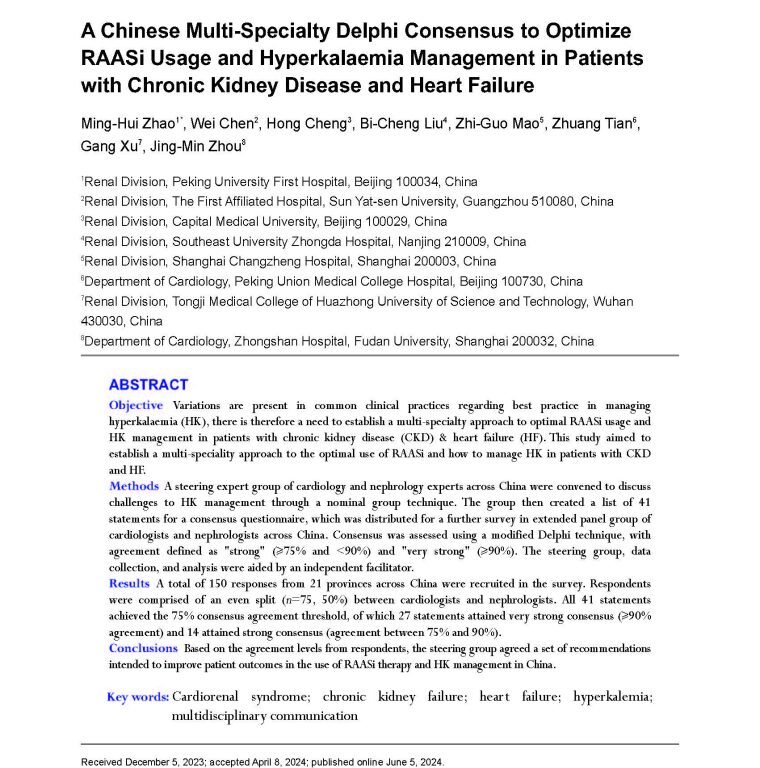
To align it, a steering group of cardiologists and nephrologists developed 41 statements across five themes. The statements were tested through a modified Delphi consensus, with a survey completed by 150 specialists drawn evenly from cardiology and nephrology across 21 Chinese provinces. Consensus was pre-specified at 75% agreement, with very strong agreement set at 90%.
All 41 statements reached consensus, 27 of them at very strong agreement. The recommendations reframe hyperkalaemia as a predictable and controllable side effect of optimal therapy: a novel potassium binder can be used to keep RAASi therapy going in patients with a history of high potassium, and permanent discontinuation should be treated as a last resort.
Triducive acted as the independent facilitator for this Delphi panel, supporting data collection, analysis and scientific writing. The consensus reflects a shift towards managing hyperkalaemia rather than withdrawing the therapies that protect these patients.
Zhao M-H, et al. Chinese Medical Sciences Journal, 2024; 39(2): 79–90. DOI: 10.24920/004327