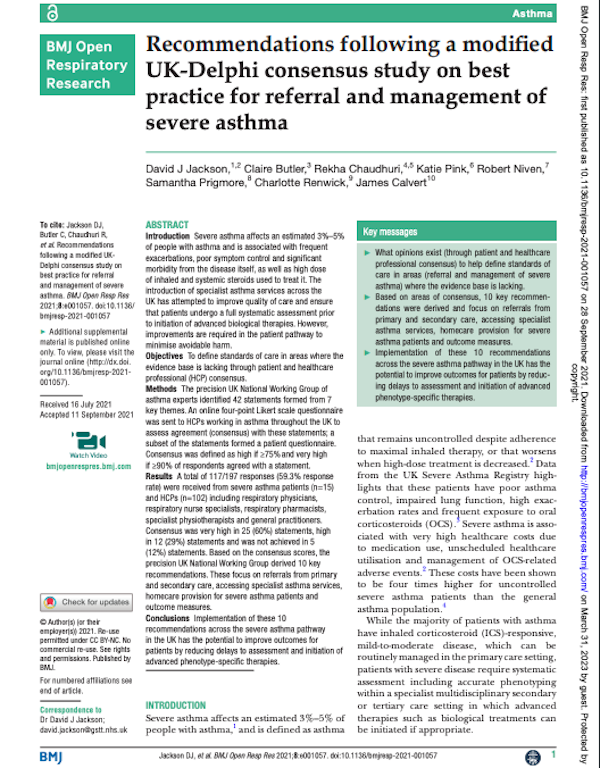


Severe asthma affects a small minority of people with asthma but accounts for a disproportionate share of exacerbations, poor symptom control and harm from high-dose steroids. Specialist services have improved how these patients are assessed and treated, yet parts of the referral and management pathway still lack a strong evidence base, and avoidable delays remain.
To define standards where the evidence is thin, the PRECISION UK National Working Group developed 42 statements across seven themes. The statements were tested through a modified Delphi consensus, with an online survey completed by 117 UK healthcare professionals and patients, including respiratory physicians, nurse specialists, pharmacists, physiotherapists and GPs. Consensus was set at 75% agreement, with very high agreement at 90%.
Thirty-seven of the 42 statements reached consensus. The ten recommendations focus on referral from primary and secondary care, access to specialist services, and homecare: patients on monoclonal antibody therapy should have access to homecare where clinically appropriate, and anyone needing three or more courses of oral corticosteroids in a year should be referred to a specialist severe asthma service.
Triducive acted as the independent facilitator for this Delphi consensus study, generating the statements, analysing the responses and providing medical writing support. Implementing the recommendations could reduce delays to assessment and to starting advanced, phenotype-specific therapies.
Jackson DJ, et al. BMJ Open Respiratory Research, 2021; 8(1): e001057. DOI: 10.1136/bmjresp-2021-001057